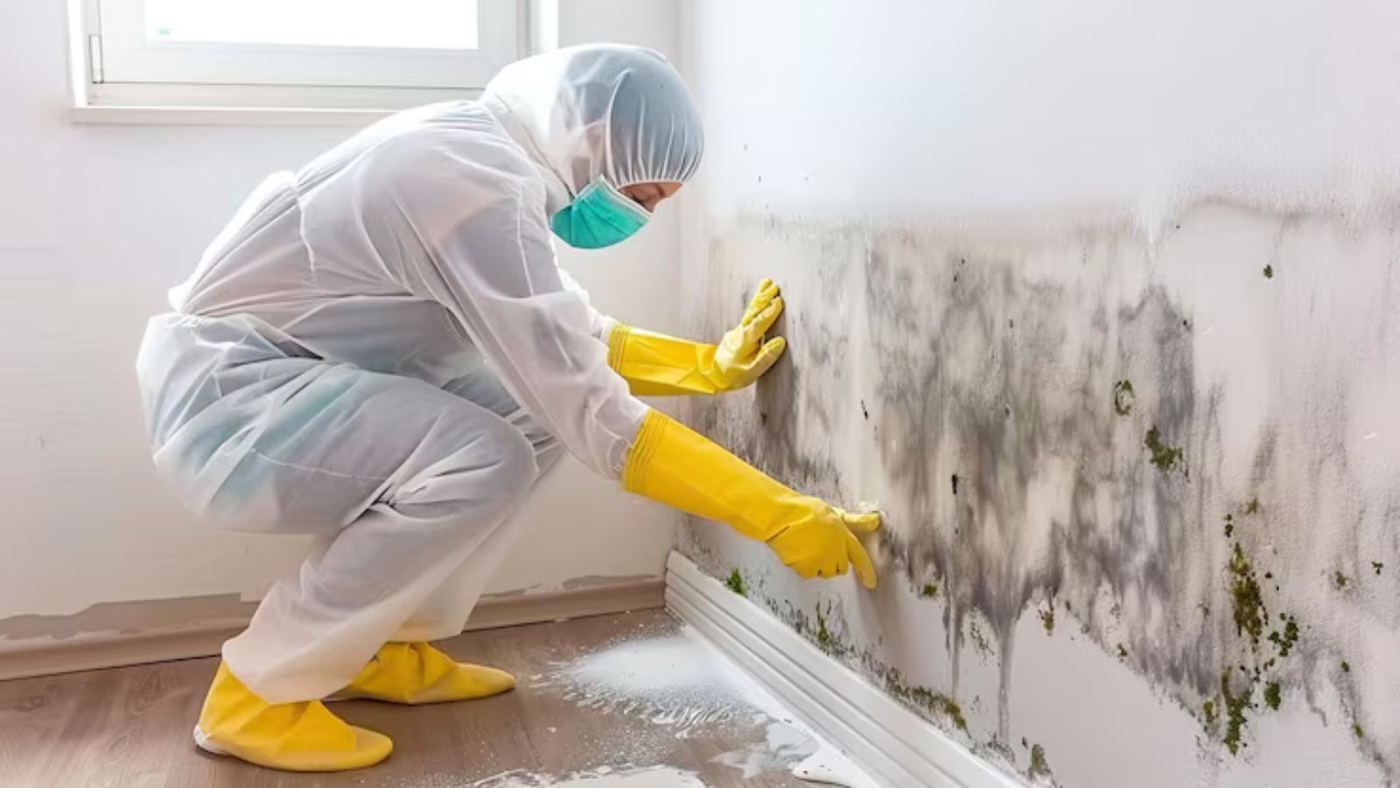
Is that musty smell or dark patch mold?
A musty smell, a dark spot on a ceiling or a bubbled patch of paint can all point to hidden moisture. Many callers mention a past leak from a toilet supply, a sink, an air conditioner drain line or a roof, and then notice a smell weeks later.
Only testing or an inspection can say what a stain is, and you should not rely on color alone. The remediation work described below is built to deal with mold once it is confirmed, and the step before that is finding the moisture. If you suspect mold, avoid disturbing the area and keep the room closed while you call.
Moisture first, then mold
Mold grows where materials stay damp. The EPA states that the key to mold control is moisture control, and that is why the first question on any mold call is where the water came from. A repaired roof, a replaced supply line or a cleared condensate drain comes before any cleaning.
Without that step, cleaning is temporary. Once the moisture is stopped, the affected materials are dried, and remediation removes what cannot be cleaned. No honest contractor promises that mold will never return, because new moisture can always restart the problem.
How mold remediation is carried out
The industry standard for mold work is ANSI/IICRC S520. You can ask any company whether its crews follow it. The steps below describe common mold work practice.
- Assess. The crew inspects, finds the moisture source and defines the affected area, often with moisture meters and a thermal camera.
- Contain. Plastic barriers and negative air machines with HEPA filtration keep spores from drifting into clean rooms.
- Remove. Mold-damaged porous materials such as drywall and insulation are cut out, bagged and removed.
- Clean. Remaining surfaces are HEPA vacuumed and wiped, and framing is cleaned as needed.
- Dry and verify. Materials are dried, readings are checked and an independent party can test afterward.
Not sure if it is mold?
Call dispatch to arrange an inspection and talk through your options.
Mold testing and independent clearance
Testing answers a different question from removal. Sampling can show what type of mold is present and how much, and clearance testing after remediation can show whether the air or surface counts are back near normal for the building.
Independent clearance means the testing is done by a party that did not do the cleanup, which avoids a conflict of interest. Buyers, sellers and lenders sometimes ask for clearance before a sale or loan closes, and nobody can promise how a lender will react.
Ask your agent or lender what they require, and ask the crew what testing fits your situation. Health questions belong to a physician, not to a contractor or a test result.
Mold removal and black mold cleanup
Black mold is a common name for dark growth, and color alone does not tell you what species is present. Remediation does not change by color. Containment, removal of damaged material, cleaning and drying are the same, and the plan depends on how much surface is affected and what materials are involved.
Small, surface-level patches on hard materials can sometimes be cleaned by trained crews without removal. Mold growing into drywall, insulation or wood framing normally needs those materials removed. Do not paint over it, and do not scrub dry mold, which can spread spores.
Mold after water damage
After a leak or flood, mold is a risk when wet materials stay wet. That is why the EPA recommends drying water-damaged areas and items within 24 to 48 hours. If your home was wet and you did not dry it, call even if you see nothing yet.
If you are in the middle of a water loss, start with water mitigation, which dries the structure and reduces the chance that mold becomes a second project.
Mold remediation and mold prevention are different jobs
Remediation removes what is already damaged. Prevention keeps moisture from returning. A clear plan covers both.
| Task | What it does | Who handles it |
|---|---|---|
| Moisture repair | Stops the leak or humidity source. | Plumber, roofer or HVAC technician. |
| Remediation | Contains, removes and cleans affected materials. | Remediation crew |
| Drying | Brings materials back to normal moisture. | Remediation or mitigation crew. |
| Clearance testing | Checks results after cleanup. | Independent tester when requested. |
| Rebuild | Replaces removed drywall and finishes. | Repair crew |
What sets the price of mold remediation
Mold jobs are priced after inspection because every home differs. These factors drive the number.
Affected area
Larger areas need more containment and removal.
Materials involved
Drywall and insulation are removed, while hard surfaces may be cleaned.
Containment and equipment
Barriers, negative air and HEPA equipment add setup and rental time.
Testing
Pre- and post-remediation testing is separate and adds time.
Rebuild
Replacement drywall and finishes are usually a separate scope.
Insurance and mold
Coverage for mold depends on the cause. Many policies cover mold that follows a covered sudden loss and exclude mold from long-term moisture. Flood insurance typically does not cover mold or mildew damage that could have been avoided, according to the California Department of Insurance. Read the exclusions in your policy and ask your insurer.
State licensing for mold work varies, so ask whether your state licenses mold work before you hire anyone. Keep photos, lab reports and your scope together for your records.
Mold in Culver City homes
Culver City's Building Safety Division lists shower wall repair or enclosures among work that needs a permit, and that matters because shower and tub surrounds are a common place for hidden moisture behind tile. If mold turns up behind a shower wall, ask the division at (310) 253-5800 whether the repair needs a permit.
The division's permit page also says permits apply to repair of plumbing, electrical, gas and mechanical systems. Condensate drain lines on air conditioners are a frequent moisture source, so check them before you assume a stain came from the roof.
Mold remediation questions from Culver City
Look for a musty smell, visible growth, bubbled paint and a history of leaks. Visual signs are not proof, so ask for an inspection or testing if you are unsure.
Remediation can address the mold, and independent clearance testing can show the results. Nobody can promise how a lender or buyer will respond, so ask them what they need.
Bleach can discolor surface growth, but it does not fix the moisture or remove growth inside porous materials. The S520 standard describes practice that does not rely on a household cleaner.
That is a question for your physician if you have health concerns. For the work itself, the crew uses containment so spores stay out of clean areas.
Not if the moisture is fixed and the materials are dry, but nobody can promise that it never will. New leaks or humidity can restart the problem.
Mold itself is rarely an emergency, but an active leak is. If water is present, call the 24/7 line and ask for emergency water removal first.