When standing water is an emergency
Water you can see on the floor is only part of the problem. It runs into wall cavities, under baseboards and down through subfloors, and it keeps spreading while you wait. Removing it quickly limits how far it travels and how many materials need replacing.
Treat it as an emergency if it covers more than a small area, if it is still flowing, or if it came from a drain, toilet or outside. Call the 24/7 line from a dry spot. A crew can often be sent the same day, and the dispatcher will tell you what to do in the meantime.
If water is still spreading, do this first
These steps buy time. They are not a substitute for a crew, but they reduce the amount of water the crew has to remove.
Stop the source
Close the main valve or the fixture supply. For a water heater, close the cold supply line at the top of the tank.
Think power first
If water is near outlets or a panel, do not step in it. Call the utility or 911 before you call the restoration line.
Lift what you can
Move electronics, rugs and furniture legs onto foil or foam blocks if you can do it without touching water.
Document it
Photograph the water line on walls and the source of the leak before anything is moved.
How water is removed
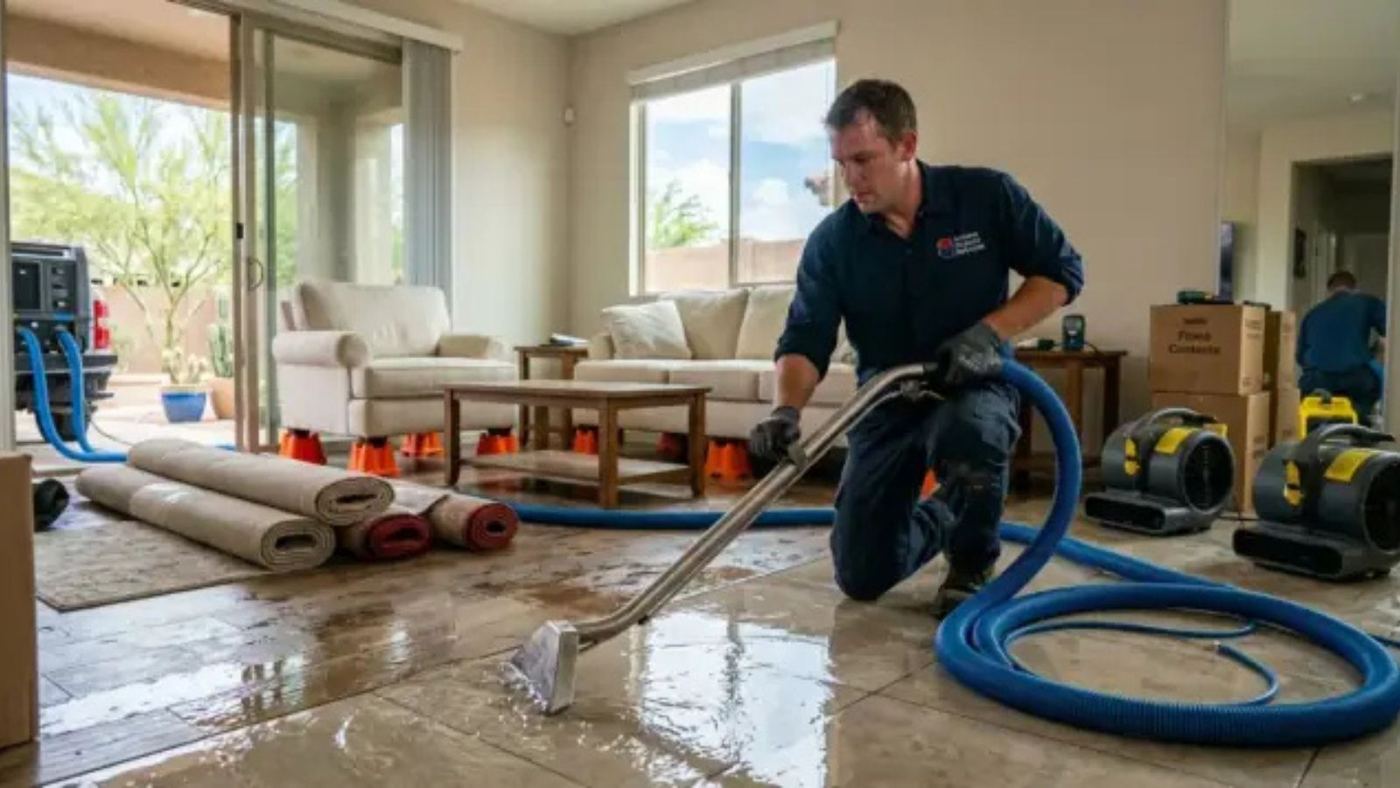
The equipment depends on how deep the water is and what is underneath it. The crew picks the method on site.
- Submersible pumps. Used when water is deep enough to sit above the floor. Hoses carry it to a drain or outside.
- Truck-mounted or portable extraction. Used for shallow water, carpet and pad, and areas where a pump cannot reach.
- Squeegee and wet vac work. Used on hard floors and at edges, which finish the visible removal.
- Moisture check afterward. Meters check walls, subfloor and framing so the crew knows how much hidden water remains.
Water on the floor right now?
The 24/7 line is the fastest way to get a crew assigned.
Burst pipe water damage
A burst pipe can release a very large volume of water in a short time, especially in a wall or ceiling where you cannot see it. The signs are a sudden wet spot, the sound of running water with every fixture off, or a water meter that keeps moving.
Close the main shutoff, open a low faucet to drain the lines, and call. The crew removes standing water, opens affected cavities and starts drying. A plumber is still needed to repair the pipe, so book one the same day while the crew works on water removal.
If the broken line is a main supply, remember that replacing water piping needs a city permit, while stopping a leak without replacing pipe does not. Ask the Building Safety Division at (310) 253-5800 when you plan the repair.
Water removal by situation
Different leaks leave different problems. This table shows the usual first move and what follows.
| Situation | First move | What follows |
|---|---|---|
| Burst supply pipe. | Shut off main, pump and extract. | Open wet cavities, set drying equipment. |
| Water heater failure. | Close cold supply, extract water. | Check flooring, baseboards and adjacent rooms. |
| Overflowing tub or toilet. | Stop the flow, extract, sort contaminated materials. | Clean and dry, check the ceiling below. |
| Sump or storm intrusion. | Pump, remove silt, check below-grade areas. | Sanitize and dry, review drainage. |
What sets the price of water removal
A price depends on the water, the space and the equipment, which no web page can see. These are the main factors.
Depth and volume
More water means longer pumping and more labor.
Contamination
Dirty water needs protective gear and extra cleaning.
Access
Stairs, crawl spaces and below-grade rooms change equipment choices.
Time of day
After-hours calls are common and are explained up front.
Insurance and burst pipes
A burst pipe is usually treated as sudden and accidental damage, which many homeowners policies cover. Gradual leaks from worn pipes and neglect often are not, and flood from outside is usually excluded. The California Department of Insurance advises reading the exclusions in your policy.
A flood insurance policy typically does not cover water from indoor sources such as burst pipes, according to the department, so your homeowners policy is the first place to check. Ask your insurer before cleanup starts, and keep photos and readings.
Culver City storms and emergency water
The city's own storm notice from February 2024 warned of peak rain rates that could reach half an inch to one inch an hour. It listed sandbags at Fire Station One downtown, the headquarters station at 9600 Culver Blvd and the City Yard at 9505 Jefferson Blvd. Water that rises in a driveway or garage during a storm is exactly what this page covers.
The Culver City Fire Department advises residents not to enter flooded subterranean garages or other below-grade areas, and says water as shallow as six inches can sweep a person away. If water is rising, call 911 for any life safety risk before you call a restoration crew.
Water removal questions from Culver City
Yes. The line is open 24/7 and dispatch assigns crews around the clock. A same-day visit is offered when a crew is free, and you are told honestly if there is a wait.
That depends on crew availability and the situation. Dispatch asks where the water is, how deep it is and whether it is clean, then explains what to expect. No arrival time is guaranteed.
Stay out of any flooded subterranean space and call 911 if anyone is at risk. Once it is safe, crews pump the area and check for damage to equipment and walls.
Yes, and that is the usual plan. The plumber repairs the source while the restoration crew removes the water and dries the structure. The two trades do not overlap.
Standing water usually is. Moisture in walls, subfloors and furniture takes longer, which is why a drying phase follows. See water mitigation for how drying works.
Yes. Crews serve Marina del Rey, where tidal and storm conditions create their own water problems. The Marina del Rey page covers that area.