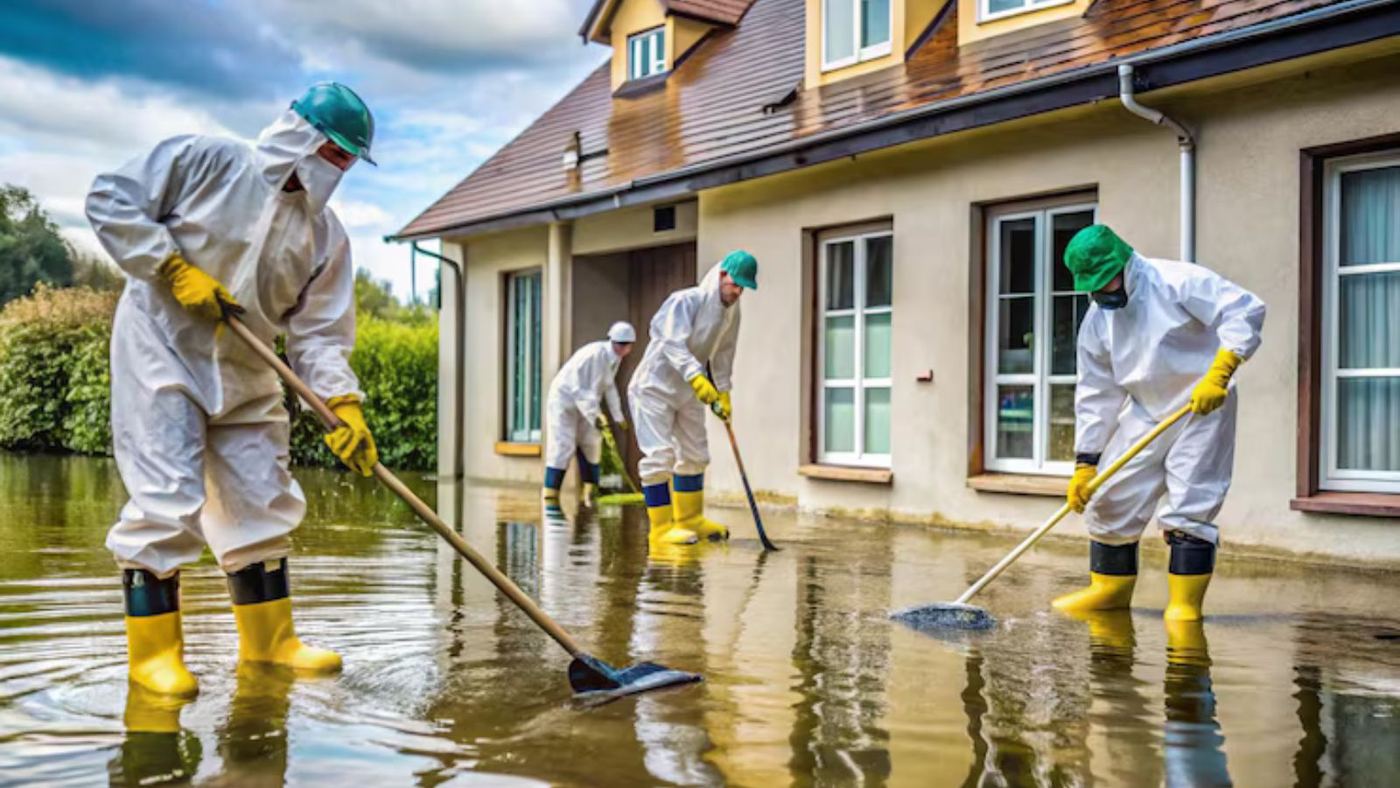
Sewage backup: what to do first
A sewage backup is the most serious kind of indoor flooding. Water that comes up through a floor drain, tub or toilet can carry bacteria and should be treated as contaminated from the first minute. Do not wade through it, do not run the washing machine or flush, and keep children and pets away.
Call the 24/7 line and describe what you see. Crews arrive in protective gear, extract the water, remove porous materials that it touched and sanitize the rest. The sewer line itself is a separate repair, and the city says that new or repaired sewer lines need a building permit.
When flooding is an emergency
Flooding is an emergency whenever water is entering the structure and you cannot stop it. That includes rain pushing through a garage door, runoff pooling at a window well and street water reaching a ground floor.
Call at any hour. Dispatch can send a crew the same day when one is available, and it will tell you what to do while you wait. While you wait, move people and pets to a dry space, lift valuables and avoid any room where water touches electrical equipment.
Category 2 and Category 3 water
Floodwater from outside is normally Category 3 under the ANSI/IICRC S500 standard, which means it is grossly contaminated. That classification changes the work in four ways.
Porous materials come out
Carpet, pad, insulation and soaked drywall are removed because they cannot be reliably cleaned.
Hard surfaces are cleaned
Concrete, tile and sealed wood are washed and treated with antimicrobial products.
Protection for the crew
Gloves, boots and respirators are standard, and the work area is controlled.
Drying comes after cleaning
Equipment is set once the contaminated materials are gone and surfaces are clean.
Flood water in the house?
The 24/7 line connects you with dispatch for Culver City.
Basement and below-grade flooding cleanup
If your property has a lower level, a garage that sits below street grade or window wells that collect water, flooding there is a different problem than a leak upstairs. Water can arrive from outside with soil and debris, and it reaches those spaces first.
The Culver City Fire Department advises residents to move heating and mechanical equipment out of below-grade areas to at least one foot above ground level and to service or install sump pumps in subterranean parking. Crews remove water from these areas with pumps, clear silt, wash the surfaces and dry the walls and floor slab.
Never enter a flooded subterranean garage or lobby yourself. The fire department says plainly not to, and a restoration crew will wait for the area to be made safe.
How a flood job runs
Every flood job has the same bones. Your crew explains the scope and price before work starts.
- Safety check. The crew confirms the electrical and gas situation and sets up protective gear and containment.
- Water removal. Pumps and extraction units remove standing water and silt.
- Removal of affected materials. Contaminated carpet, pad, insulation and drywall are cut out and bagged.
- Cleaning and sanitizing. Remaining surfaces are cleaned with an antimicrobial suited to the material.
- Structural drying. Air movers and dehumidifiers dry the structure and moisture is checked against readings.
Where flood water comes from and what it changes
Different sources leave different problems. The crew confirms the source on site, but this table shows the usual approach.
| Source | Typical issue | Usual approach |
|---|---|---|
| Storm runoff at doors and garage. | Silt, debris and Category 3 water. | Extract, remove silt, clean and dry. |
| Sewer or drain backup. | Contaminated water from a fixture or floor drain. | Protective gear, full removal of porous materials. |
| Window wells and basement walls. | Water behind the wall surface. | Open walls to check cavities, dry framing. |
| Roof and gutter overflow. | Water entering at walls and ceilings. | Dry cavities, check insulation, repair after drying. |
Flood insurance is a separate product
This is the most misunderstood part of a flood claim. The California Department of Insurance says that standard homeowners policies typically exclude flood, mudslide and debris flow, and that insurance for flood losses is generally not provided in a homeowners or renters policy. The state's FAIR Plan does not cover storm-related damage unless a separate difference in conditions policy is in place.
Flood insurance is sold through licensed agents. The department notes that a new policy typically takes effect 30 days after purchase, so it is not something to buy during a storm. The NFIP Help Center at 1-877-336-2627 can refer you to an agent. Ask your insurer which part of your loss falls under which policy.
What sets the price of flood restoration
Flood jobs vary widely, and an honest price comes after someone has seen the space. These factors move it most.
Water category
Floodwater is usually Category 3, which adds removal and cleaning steps.
Affected square footage
Larger areas mean more pumping, removal and drying equipment.
Materials removed
Carpet, pad, insulation and drywall that cannot be saved add labor and disposal.
Below-grade access
Stairs, tight rooms and garages change equipment and time.
Drying days
Equipment stays until moisture readings reach the dry standard.
Ballona Creek and flooding in Culver City
Ballona Creek runs through Culver City, and the city's own Ballona Creek page says it has been a concrete flood control channel since 1935, about nine miles long, draining a watershed of roughly 130 square miles. The same page notes that Culver City voters approved Measure CW in 2016, a parcel tax that funds stormwater projects.
None of that tells you whether your own address is at risk. Check the FEMA Flood Map Service Center for your address and ask your insurer what your policy says. The fire department notes that heavy rain can pond in low-lying areas and affect streets and residences, and it points residents to Public Works at (310) 253-5635 to report blocked street catch basins.
Flood damage questions from Culver City
Yes. The 24/7 line is staffed at night, on weekends and on holidays. A same-day visit is offered when a crew is available, and the dispatcher will tell you what to do in the meantime.
Usually not. The California Department of Insurance says flood is typically excluded from homeowners policies. Check your policy and ask your insurer what applies.
Treat it as contaminated. Keep everyone out of the water, avoid using fixtures and call the line. Crews wear protective gear and remove porous materials the water touched.
Carpet exposed to Category 3 water is normally removed and discarded. The risk of leaving it in place is higher than the cost of replacing it, and the crew will explain why for your situation.
Look up your address on the FEMA Flood Map Service Center. A map is a starting point and does not predict what will happen in a given storm, so ask your insurer and the city if you are unsure.
Yes. Marina del Rey sits at the mouth of Ballona Creek and has its own water issues. The Marina del Rey page covers coverage and ZIP 90292.