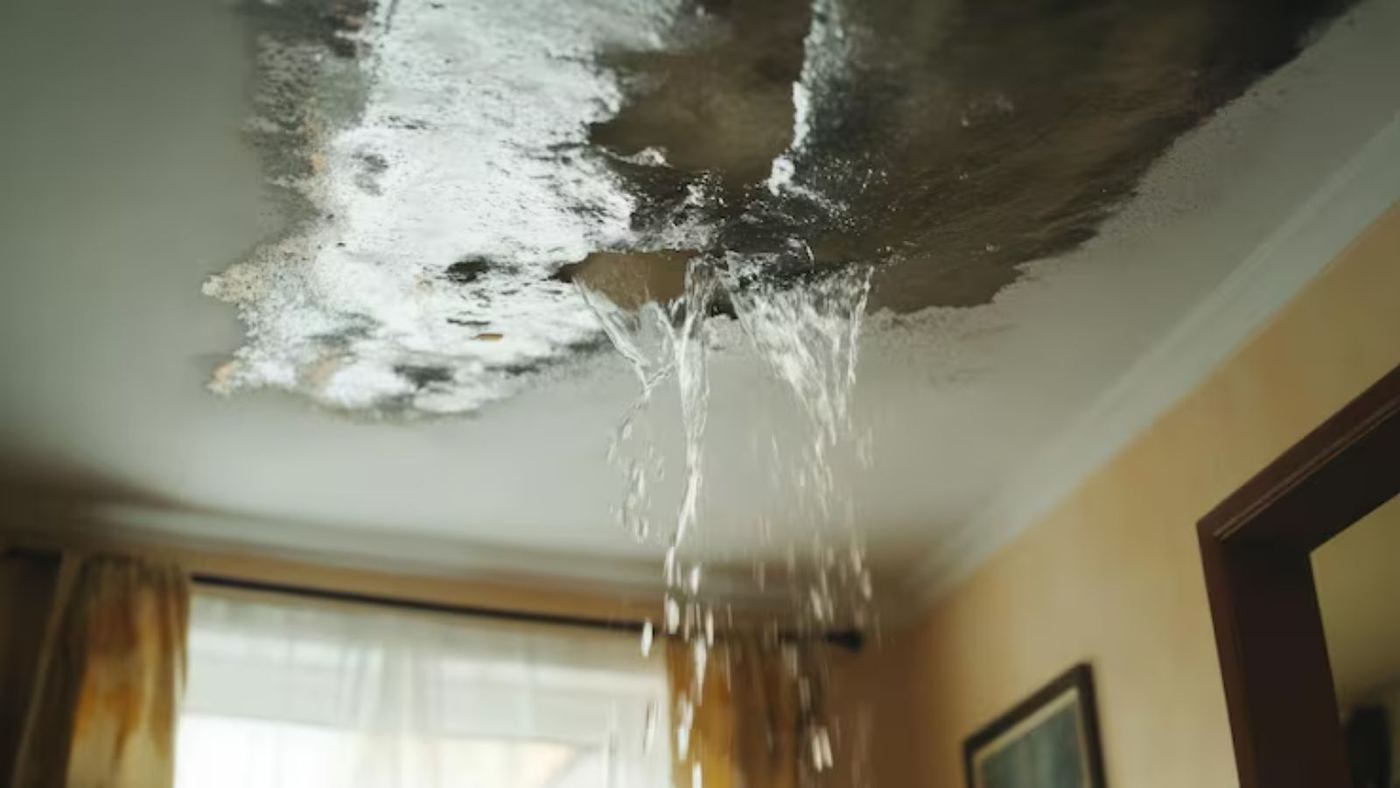
Why air conditioners leak
An air conditioner pulls moisture from the air as it cools. That water, called condensate, collects in a pan and drains away through a line. If the line clogs with algae or debris, the pan overflows and the water goes where gravity sends it.
A frozen evaporator coil causes a similar problem. When it thaws, it can melt more water than the pan can handle. Other causes include a cracked pan, a loose connection or a failed float switch that is supposed to shut the system down.
Symptoms and likely causes
Use this table to point a technician in the right direction.
| Symptom | Likely cause | Who fixes it |
|---|---|---|
| Ceiling stain below an attic unit. | Clogged condensate line or cracked pan. | HVAC technician, then repair crew. |
| Water around an indoor unit. | Overflowing pan or frozen coil. | HVAC technician |
| Musty smell near vents. | Moisture in the system or ducts. | HVAC technician, inspection. |
| Wet closet floor. | Drain line leak near an air handler. | HVAC technician, drying crew. |
| Ice on lines or coil. | Airflow or refrigerant problem. | HVAC technician |
What to do when you find an AC leak
Move fast and keep it safe.
- Turn off the system. Switch off the air conditioner at the thermostat and, if you can safely reach it, at the breaker.
- Stop the water. Place a bucket or towels under drips and remove standing water from the floor.
- Clear the drain line. A technician can flush or vacuum the condensate line, and some homeowners use a wet vacuum on the outside end.
- Call for drying. Wet drywall and insulation need drying. Do not close up the area.
- Document damage. Photograph the stain, the unit and the pan for your records.
Ceiling stained from an AC leak?
Call dispatch and ask about drying and repair.
Drying and repair after an AC leak
Condensate water is usually clean at the source, but it travels through insulation and dust and can leave stains and smells. Wet drywall and insulation are removed if they are soft, while framing is dried in place.
The repair that follows is the same rebuild used for any ceiling or wall: new drywall, texture and paint. The water damage repair page explains how scope and price are set. If water also reached carpet or flooring, water damage cleanup covers removal and sanitizing.
Preventing repeat AC leaks
Most AC leaks are preventable with simple upkeep.
- Have the condensate line flushed during regular HVAC service.
- Check that the drain pan is clean, level and not cracked.
- Replace air filters on schedule to prevent coil freezing.
- Ask your technician to install a float switch or a secondary pan if none exists.
- Watch for ceiling stains and water at the air handler after heavy use.
Insurance and AC leaks
Coverage for an AC leak depends on your policy and the cause. A sudden failure is often treated as accidental damage, while slow leaks from neglected upkeep often are not. The California Department of Insurance lists wear and tear among the perils that are usually excluded and advises reading your policy.
Take photos, keep the HVAC technician's invoice and share it with your insurer. If you are unsure, ask before repairs begin.
What a technician checks during an AC service
A service visit usually includes clearing the condensate line, checking the drain pan, inspecting the coil and verifying the float switch. Technicians also check airflow and filters, since poor airflow is a common cause of frozen coils.
Ask the technician to show you where the drain line ends and to confirm that water flows freely. Keep the service report with your records. It shows you maintained the system, which can matter if you later file an insurance claim.
AC leak response checklist
Quick reference for the first hour.
| Do | Why |
|---|---|
| Turn off the system. | Stops more condensate and protects equipment. |
| Catch drips and photograph the damage. | Limits spread and documents the loss. |
| Keep the area ventilated. | Helps surfaces dry. |
| Call drying and repair after the source is stopped. | Prevents repeat wetting. |
Culver City permits for mechanical and water heater work
The Building Safety Division's permit page says permits apply to repair of plumbing, electrical, gas and mechanical systems, and its plumbing list names water heater replacement as needing one. It lists stopping leaks and clearing clogs without replacing pipe as not needing one.
Ask your HVAC contractor whether a permit applies to your repair, and confirm with the division at (310) 253-5800 if needed. Properties in Marina del Rey follow county permit rules, so ask the county.
Related pages
Read more about water damage repair and water damage cleanup, see how dispatch works in Marina del Rey, or check the service areas page for coverage.
Talk to dispatch about your situation
Call the 24/7 line and describe what you see. Scope and price are explained before work starts.
AC leak questions from Culver City
At the source it is usually clean, but it can pick up dirt and microbes as it travels. Dry it quickly and clean affected materials.
Some homeowners can clear the outside end with a wet vacuum. Anything involving the pan, coil or electrical parts should go to a technician.
The EPA says to dry water-damaged areas and items within 24 to 48 hours to prevent mold growth. Dry the area quickly and watch for smells.
A repair or restoration crew handles drying, drywall, texture and paint after the HVAC technician stops the source.
The Building Safety Division says permits apply to repair of mechanical systems. Confirm with the division at (310) 253-5800 before work.