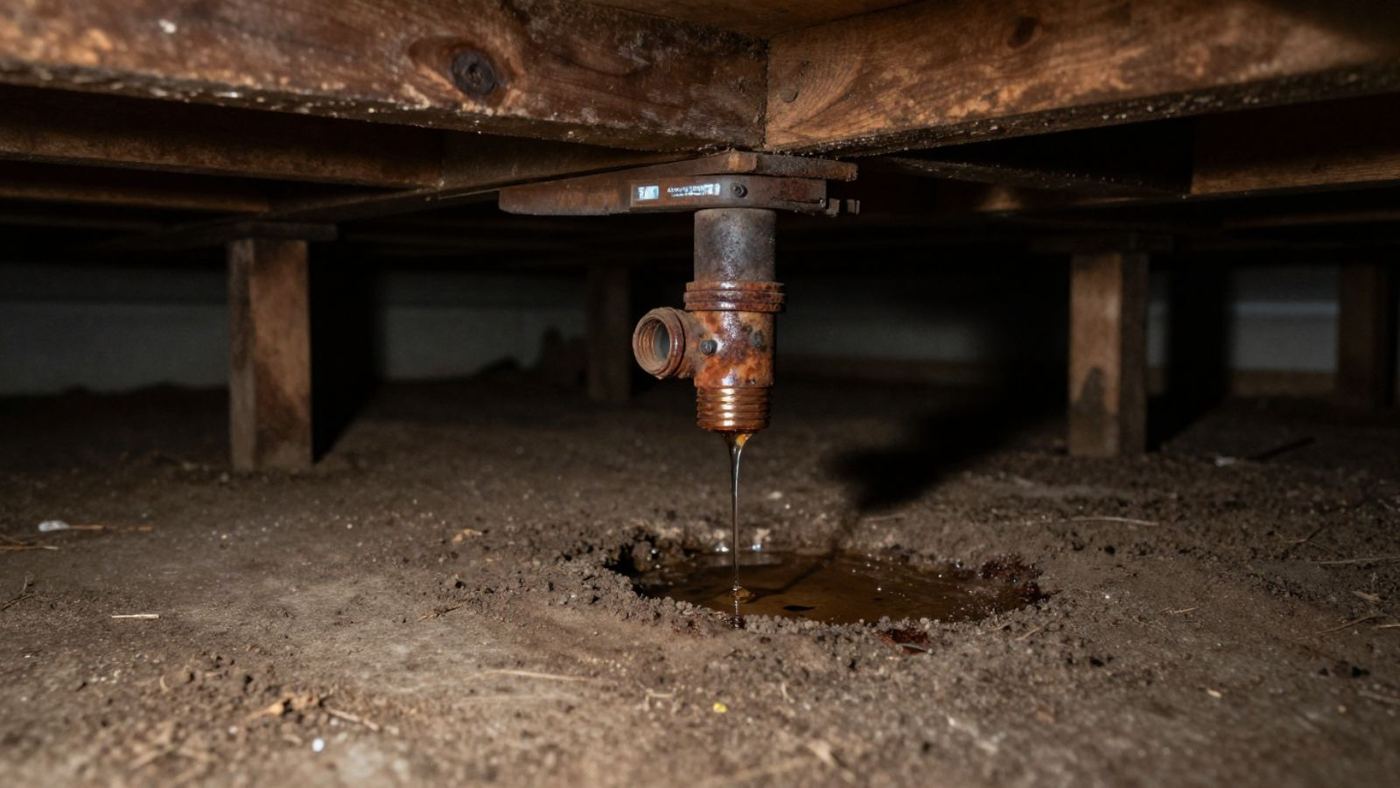
How common crawl spaces are here and why water gets in
Be clear about the odds first. Crawl spaces exist only in homes built on a raised foundation, and this is a pattern in many older Los Angeles neighborhoods rather than a rule. Newer buildings often sit on slabs or over parking, so this page applies to raised houses only. If your home sits on a slab, see our slab leak page instead.
Water reaches a crawl space from three directions. A supply or drain line above can leak down through the floor, rain can run toward the foundation and seep through vents, and irrigation or a nearby leak can soak the soil. Because the space is dark and closed, the first sign is often a damp smell in the house.
Signs of water in a crawl space
Symptoms inside the house often point down.
| Sign | What it suggests | Next step |
|---|---|---|
| Musty smell near floor vents. | Damp air rising from below. | Call for an inspection of the space. |
| Soft or bouncy floor spots. | Wet subfloor or joists. | Stay off the area and call. |
| Insulation hanging down. | Insulation soaked and heavy. | Photograph through the access panel. |
| Standing water seen at the vent. | Water collecting at the foundation. | Check the meter and call. |
| Higher humidity indoors. | Moisture from soil or a leak. | Ask for moisture readings. |
First hour safety steps before anyone enters a crawl space
A crawl space can hold hazards you cannot see from the opening.
- Do not enter if water is standing near wiring, ducts or a water heater base.
- Turn off power to anything located in the space before a crew goes in.
- Close the main water valve if a supply line may be leaking.
- Do not go in alone, because tight spaces and wet soil are slippery and hard to leave.
- Call dispatch and describe the panel location and what you saw.
Mold risk and the EPA's guidance
The EPA's mold guidance says mold growth can be prevented by drying water-damaged materials within 24 to 48 hours. A crawl space is slow to dry because airflow is poor, so a delay matters more here than in a living room.
For that reason the crew focuses on removing standing water first, then wet insulation, then forcing air through the space with fans and a dehumidifier.
How crawl space cleanup runs
The process is slower than room work because access is tight.
- Find the source. The crew checks supply lines, drain lines and the foundation edges, and photographs each wet area.
- Pump standing water. Submersible pumps and wet vacuums remove pooled water from low spots.
- Remove wet insulation. Soaked batts are pulled out and bagged because they will not dry in place.
- Dry the space. Air movers and a dehumidifier run while moisture readings are logged on joists and subfloor.
- Check the structure. Final readings confirm the framing and subfloor are dry before anything is closed up.
Floor soft and the source unclear?
Call the 24/7 line and describe the smell and the spot.
What changes the cost of crawl space cleanup
Access and height decide a lot of the work. A tall space with a wide hatch is easier to work in than a low one with a small panel. The volume of water, the amount of insulation to remove and the length of drying all affect the scope.
Contaminated water such as sewage or greywater changes the job, and the crew explains the scope and price on site.
Insurance and crawl space water
Insurers draw a line between sudden plumbing failure and groundwater or rain seepage. The first is often covered, and the second often falls under flood exclusions or a separate policy. Read your policy and ask what your insurer treats as flood.
Photographs and moisture readings help document the loss. Keep the plumber's report if a line failed.
Mistakes to avoid and prevention
Hidden moisture grows into a larger problem when ignored.
- Leaving wet insulation up against the subfloor.
- Closing vents or the access panel without drying first.
- Skipping a yearly look at irrigation and gutter drainage near the foundation.
- Treating a musty smell with air freshener.
- Entering the space without checking power and footing.
Coverage and related pages
Raised-foundation houses appear in several Culver City neighborhoods, and crews also visit Marina del Rey, where groundwater and tide patterns differ. The service areas page has the coverage list.
For drying details, see water mitigation. Many restoration companies follow ANSI/IICRC S500 as a reference, and you can ask whether a crew works to it.
Crawl space water questions from Culver City
Yes. Call at any hour and dispatch plans a same-day crawl space visit if a crew is free.
Only raised-foundation homes do. Look for a small access hatch outside or inside a closet, or ask a plumber.
Rarely. Soaked batts hold water against the subfloor and are usually removed.
Poor airflow slows it. Several days is common, and readings decide when it is done.
It depends on the cause. Plumbing failure is often covered and groundwater often is not, so ask your insurer.