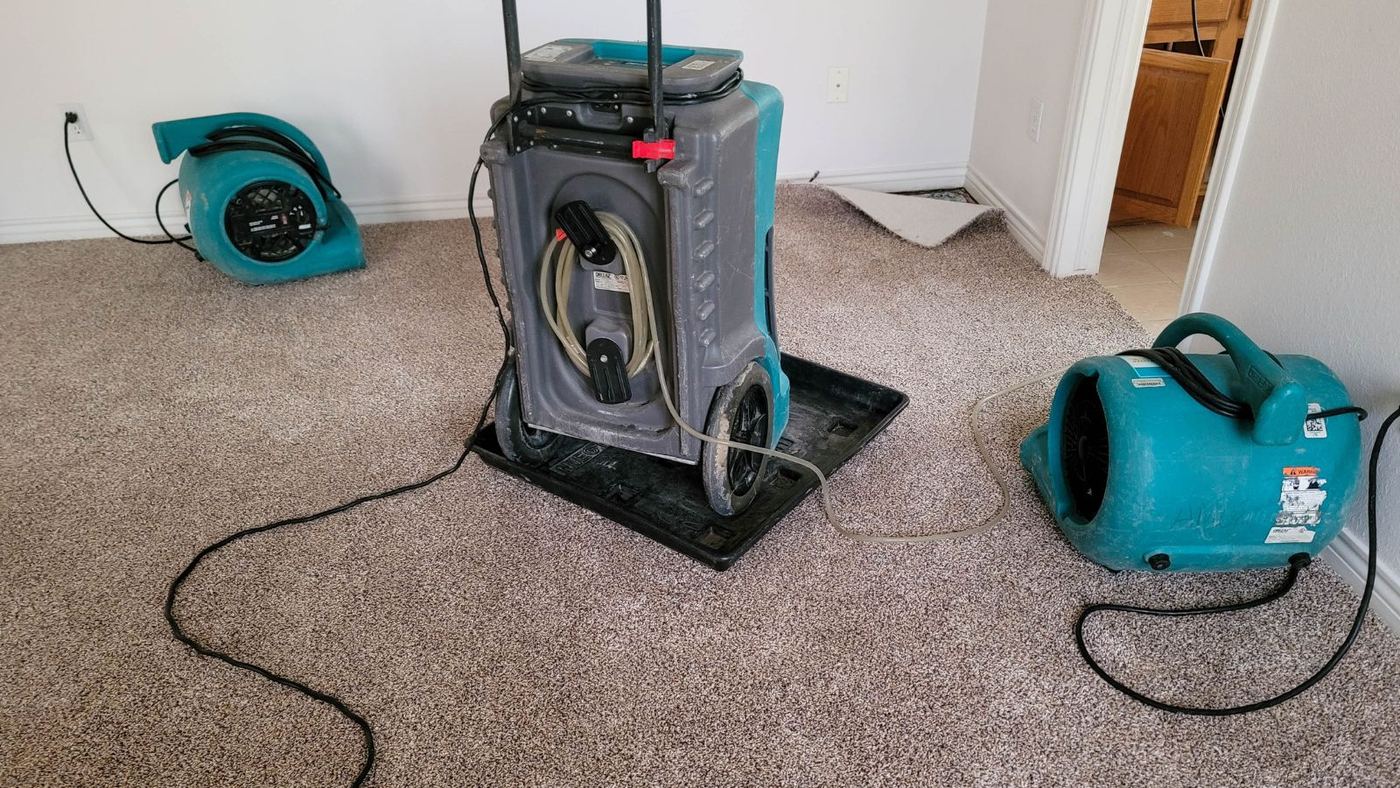
Why drying is its own step
Standing water is the visible part of a loss. The rest sits in wood, drywall, plaster, insulation and concrete, and it leaves slowly. Surface cleaning and a few fans leave moisture inside walls and under floors, and that moisture is what feeds mold and warps flooring.
This page is about the drying method itself. For the first one to three days after a loss, see water mitigation, which covers stopping damage. Here we cover measuring and removing moisture from the structure.
Equipment and what each piece does
A drying setup uses several kinds of equipment together.
| Equipment | What it does | Why it matters |
|---|---|---|
| Moisture meter | Reads moisture in wood and drywall. | Shows what is wet and how wet. |
| Thermal camera | Shows temperature patterns on surfaces. | Finds hidden wet areas to check with a meter. |
| Air mover | Pushes air across wet surfaces. | Speeds evaporation from the surface. |
| Dehumidifier | Pulls moisture out of the air. | Keeps the air able to take on more moisture. |
| Hygrometer | Reads air temperature and humidity. | Checks that drying conditions stay on track. |
First hour safety steps before drying equipment goes on
Equipment draws power, and wet structures can hide hazards.
- Confirm the water source is closed.
- Turn off power to wet circuits until an electrician or the crew has checked them.
- Do not run extension cords through standing water.
- Keep children and pets out of rooms with equipment.
- Ask dispatch which items to move before the crew arrives.
Reading the numbers
A dry reference reading is taken from a similar unaffected material in the same building, and wet areas are dried toward that value. The crew records readings daily so drying is shown on paper, not guessed.
ANSI/IICRC S500 is the reference many restoration companies use for water damage work and drying goals. You can ask a company whether its crews follow it and how they record readings.
How a drying job runs
The same cycle repeats until readings are done.
- Map moisture. The crew scans with a thermal camera and confirms with a meter, then marks wet areas and takes baseline readings.
- Set equipment. Air movers and dehumidifiers are placed to match the room size and the materials.
- Open what traps moisture. Baseboards, toe-kicks and sometimes wall sections are opened so air reaches cavities.
- Monitor daily. The crew returns to take readings, move equipment and adjust the setup.
- Confirm and remove. Equipment is removed only after readings match the dry reference.
Not sure the structure is dry?
Call dispatch and ask about moisture readings.
What changes the cost of structural drying
The main drivers are how many rooms are wet, what materials are wet and how many days of equipment the readings require. Concrete, plaster and thick framing dry slower than thin drywall.
The more equipment and days, the larger the scope. Scope and price are explained on site after the first readings.
Insurance and drying records
Insurers often want proof that drying was needed and finished. Daily moisture logs, photographs and an equipment list are the evidence. Ask the crew for copies before the equipment leaves.
A drying record also protects you if a buyer or inspector later asks whether a past loss was handled.
Mistakes to avoid
Drying jobs fail in predictable ways.
- Stopping drying because the room feels dry.
- Running fans in a closed room with no dehumidifier.
- Turning equipment off to save power before readings are done.
- Covering floors or walls before they are dry.
- Skipping the final reading.
Coverage and related pages
Drying visits happen across Culver City and in Marina del Rey, where coastal humidity can slow progress. The service areas page explains coverage.
For extraction before drying, see emergency water removal. For rebuild after drying, see water damage repair.
Structural drying questions from Culver City
Yes. Dispatch is open at all hours, and a drying visit can be set for the same day when a crew is free.
It depends on materials and moisture. Several days is common, and readings decide the end.
Fans move air and a dehumidifier removes the moisture from it, so both are needed.
Sometimes. Readings decide whether cavities need to be opened.
Daily moisture readings, photographs and an equipment list, which you can pass to your insurer.