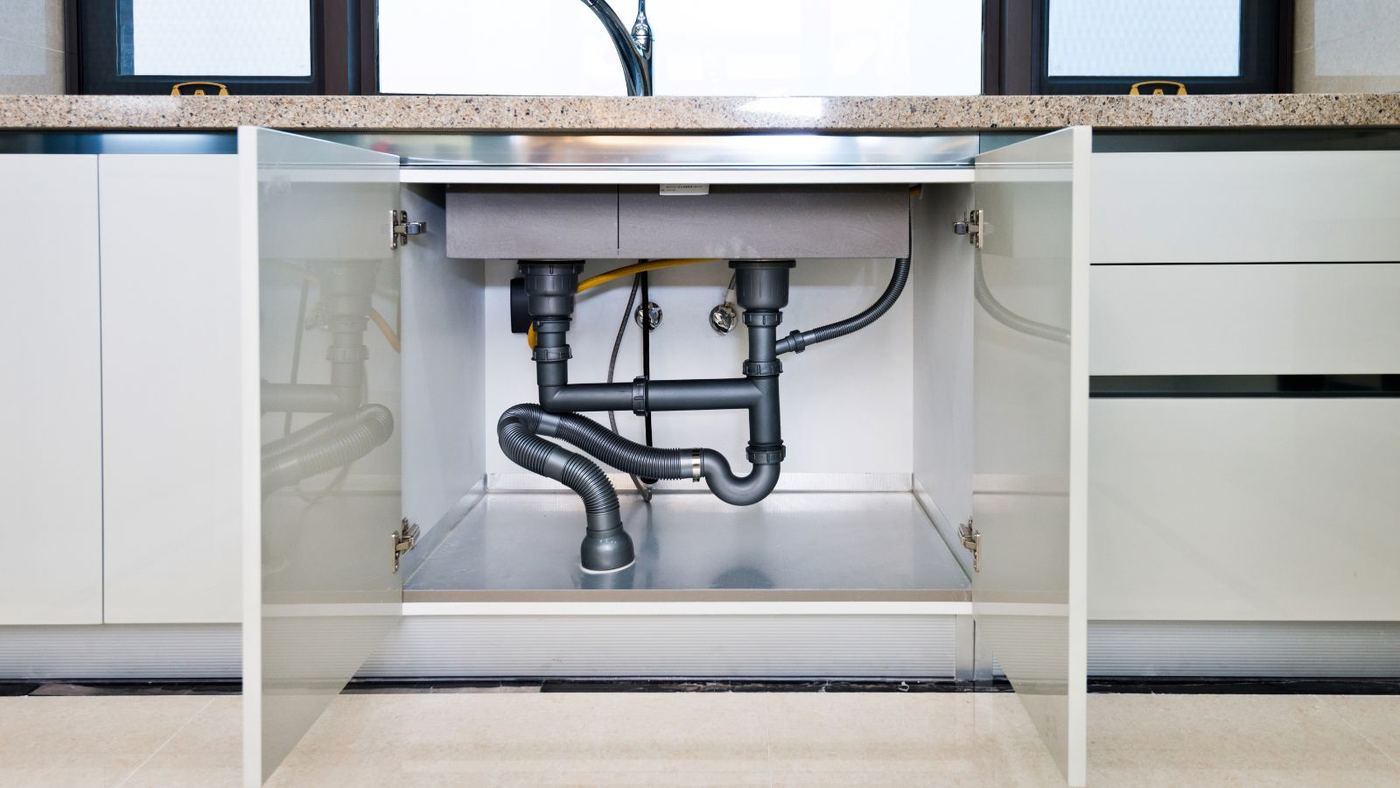
How kitchens get wet
This page is about the room. Kitchen leaks come from a sink supply line, a drain trap, a faucet, a dishwasher connection or a refrigerator line, and from a leak above that runs down through the ceiling. Which fixture failed matters less than how far the water traveled.
Cabinets are the main trap. Particleboard bases swell when wet and do not return to shape, and a toe-kick can hold water against the subfloor for days. Many Culver City homes date from before 1980 according to the city's hazard plan housing data, so older kitchens may carry older supply lines and original flooring layers.
Where water hides in a kitchen
Check these places when you suspect a leak.
| Place | What to look for | Why it matters |
|---|---|---|
| Under the sink. | Dark stains or swollen cabinet floor. | A slow drip can run for months. |
| Toe-kick and base trim. | Warping or lifting paint. | Water travels along the base. |
| Dishwasher edges | Lifting laminate or tile grout stains. | Door and hose leaks run under flooring. |
| Behind the refrigerator. | Damp floor or a musty smell. | Ice maker lines leak out of sight. |
| Ceiling below an upstairs kitchen. | Brown stains or sag. | Water traveled down through the floor. |
First hour safety steps in a wet kitchen
A kitchen has electricity, gas and water in one room.
- Close the supply valve under the sink or the main valve.
- Turn off power to the kitchen at the breaker if water is near outlets or appliances.
- If you smell gas, leave and call 911.
- Unplug small appliances only if the plug and floor are dry.
- Take photographs before cleaning and then call dispatch.
Permit notes for kitchen work
The Building Safety Division's published permit list says interior clean up needs no permit. Replacing plumbing fixtures, cabinets in a remodel or wiring may. Ask your contractor which parts of the repair fall under permit rules, and confirm with the division at (310) 253-5800.
Keeping cleanup and rebuild as separate invoices also makes insurance review simpler.
How kitchen restoration runs
Kitchen jobs are mostly about access.
- Find the source. The crew checks fixtures, valves and appliance lines, and photographs the damage.
- Map moisture. Meters and a thermal camera check cabinet bases, walls and flooring.
- Open what traps water. Toe-kicks come off, and wet flooring or cabinet bases are removed if they will not dry.
- Dry in place. Air movers and dehumidifiers run with readings logged until the room is dry.
- Prepare for repair. Once dry, the room goes to rebuild, and water damage repair explains how that scope is set.
Cabinets damp and the source unclear?
Call dispatch and ask about moisture mapping.
What changes the cost of kitchen restoration
The main factors are how long the leak ran, whether cabinets are salvageable and what the floor is made of. Tile over a slab dries differently from engineered flooring over a wood subfloor.
The number of wet rooms nearby and the days of drying also affect the scope. Scope and price are explained on site once the cabinets and floor are checked.
Insurance and kitchen leaks
Sudden failure at a supply line or an appliance is often covered, and a long slow drip under a sink often is not. Cabinets and flooring are usually claimed as part of the same loss.
Keep photographs, the plumber's invoice and our moisture readings together.
Prevention
A few checks catch most kitchen leaks.
- Look under the sink every few months with a flashlight and a dry paper towel.
- Replace old braided or rubber supply lines.
- Do not store cleaning supplies where a leak could hide behind them.
- Watch for a damp smell behind the refrigerator.
- Fix a dripping faucet promptly.
Coverage and related pages
Kitchen calls come from houses and condos in every part of Culver City and from Marina del Rey. The service areas page explains coverage.
For the first days after a leak, see water mitigation. Many companies follow ANSI/IICRC S500 as a reference for water work.
Kitchen water damage questions from Culver City
Yes. Call day or night, and dispatch sets a same-day visit when a crew is free.
Solid wood sometimes can. Particleboard bases usually cannot.
Check under the sink, behind appliances and along the toe-kick, then ask for moisture mapping.
Sometimes. Readings decide whether it can dry in place.
Sudden leaks often are, and slow leaks often are not. Ask your insurer.