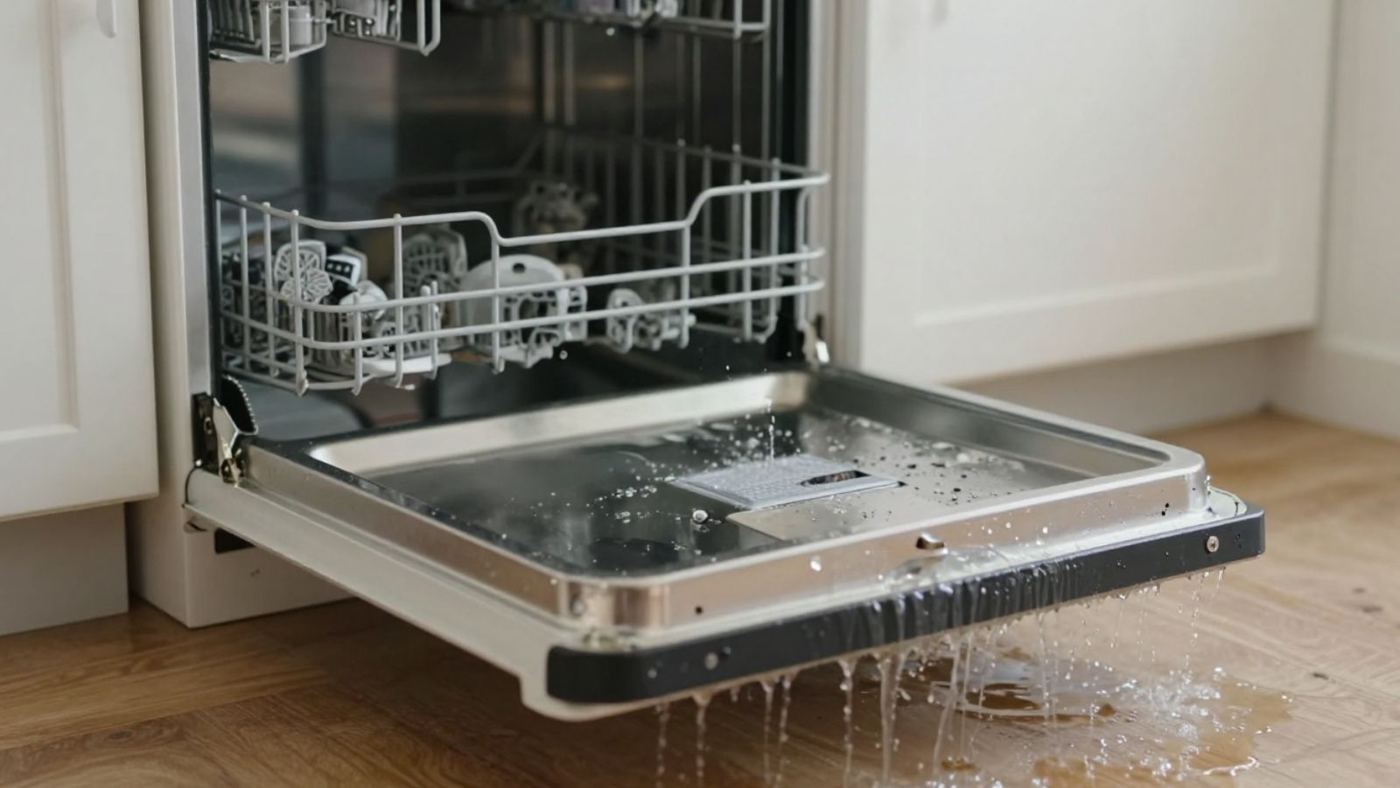
How appliance leaks happen in Culver City homes and buildings
Culver City has a lot of shared-wall housing. The city's Multi-Jurisdictional Hazard Mitigation Plan reports that multi-unit buildings with 20 or more units made up about 23.9 percent of the housing stock in its housing data, and detached single-unit homes about 39.1 percent. In an apartment or condo, a washer leak can reach a neighbor below, which turns a small repair into a shared problem.
Rubber supply hoses crack, drain lines slip off standpipes, dishwasher door gaskets harden and refrigerator ice maker lines pop their fittings. Most leaks start small and run whenever the appliance cycles.
Which appliance, which leak
The appliance type tells you where to look.
| Appliance | Common failure | Where water goes |
|---|---|---|
| Washing machine | Supply hose burst or drain hose slipped. | Floor, subfloor and the unit below. |
| Dishwasher | Door gasket or inlet valve leak. | Cabinet toe-kick and flooring. |
| Refrigerator | Ice maker or water filter line leak. | Under the unit and behind the wall. |
| Garbage disposal | Seal or drain connection leak. | Cabinet floor under the sink. |
| Water softener or standpipe. | Drain connection leak. | Garage or laundry closet floor. |
First hour safety steps for an appliance leak
Water and appliance power cords do not mix.
- Unplug the appliance only if the plug and floor are dry, otherwise switch off its breaker.
- Close the appliance's supply valve, or the main valve if you cannot find it.
- Do not pull a heavy washer or refrigerator across a wet floor.
- Lift small rugs and boxes off the wet area.
- Take photos before you wipe anything up.
Permits and replacement work
The Building Safety Division's published permit list names a new or replacement dishwasher and a standpipe for a washing machine as plumbing permit items. It also lists wiring for appliances as an electrical item. Ask your installer whether a replacement needs a permit.
The same list says portable plug-in equipment and appliances need none, and that interior clean up does not either. Our work is the clean up and drying, and the installer's work is the appliance.
How the cleanup runs after an appliance leak
The leak is usually small in volume but hidden in location.
- Locate the path. The crew follows the water from the appliance to where it traveled, including under cabinets and behind walls.
- Check with moisture meters. Readings show whether subfloor, drywall and cabinet bases are wet beyond what can be seen.
- Remove what cannot dry. Wet toe-kick, swollen particleboard and soaked underlayment are removed.
- Dry in place. Air movers and a dehumidifier dry flooring and cavities while readings are logged.
- Document for your insurer. Photos and readings are kept so the claim has a paper trail.
Not sure how far the water went?
Call dispatch and ask for a moisture check on the floor.
What changes the cost of appliance leak cleanup
The cost follows how long the appliance leaked and what is under it. Tile on a slab is more forgiving than engineered flooring over a wood subfloor, and a leak into a cabinet base is different from a leak into a wall.
In a multi-unit building, more units can be involved. Scope and price are explained when the crew has checked the floor.
Insurance and appliance leaks
Sudden appliance failures are often treated as covered accidents. A leak that ran slowly for weeks may fall under exclusions for wear or neglect. Your policy and your insurer decide.
In a condo or apartment, building rules and a landlord's or association's policy may also apply, so tell the property manager right away.
Prevention
A few small habits cut appliance leaks sharply.
- Replace rubber washer hoses with braided hoses on a regular schedule.
- Do not run a washer or dishwasher when no one is home.
- Pull the appliance out once a year and look at hoses and the floor.
- Use a drip tray or a leak sensor where a unit sits over finished space.
- Close the washer valves when you travel.
Where we work
Many appliance calls come from shared buildings, in Culver City and in Marina del Rey, where a leak can cross floors. Read the service areas page for coverage details.
The reference most restoration firms follow for water work is ANSI/IICRC S500. For a leak that opened up cabinets, water damage repair covers the rebuild, and water damage cleanup explains the first days.
Appliance leak questions from Culver City
Yes. Dispatch is open at all hours, and a visit is scheduled for the same day when a crew can be spared.
Yes. In a multi-unit building, water can pass through the floor. Tell your property manager and photograph the damage.
It can. Water often runs under the cabinet toe-kick and into flooring before anyone sees it.
The appliance stops leaking when its supply is closed, but materials can stay wet. Moisture readings tell you.
The Building Safety Division's published list names new or replacement dishwashers as plumbing permit items. Confirm at (310) 253-5800.